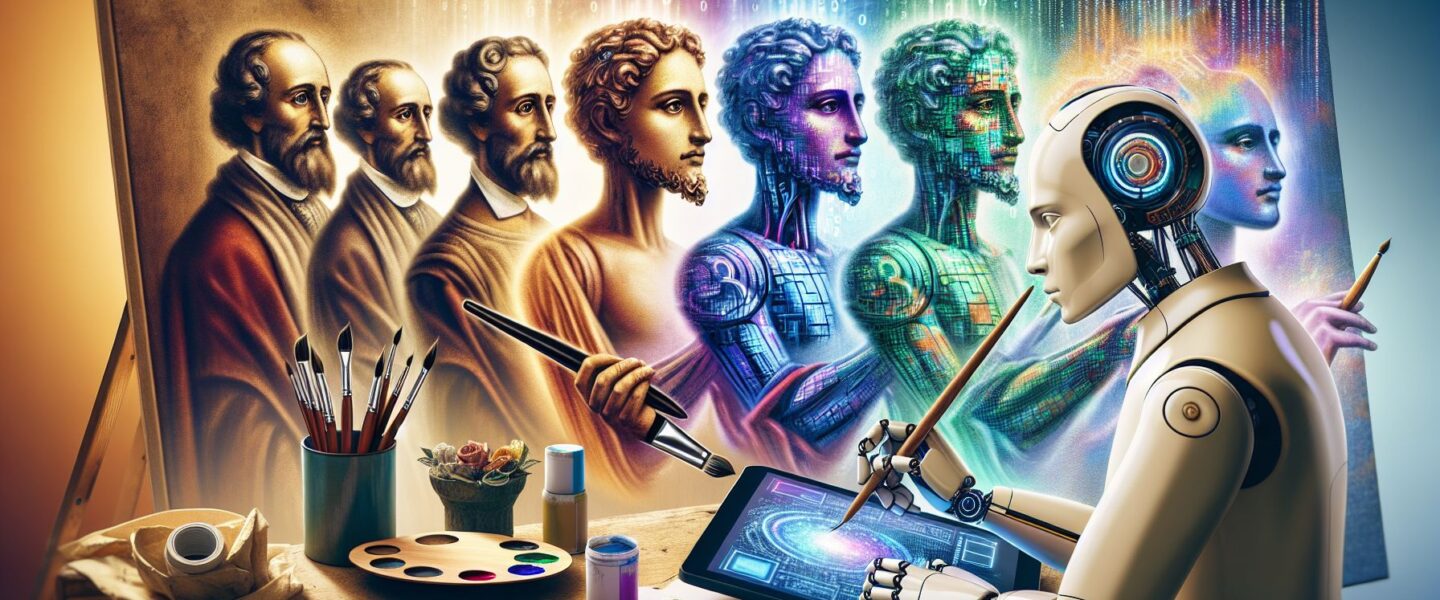
Hey tech enthusiasts! Today, I want to talk about something that’s been blowing my mind lately: artificial intelligence crashing into the world of creativity and art. This isn’t some distant sci-fi dream anymore. It’s happening right now, and it’s way weirder and more exciting than I expected.
Unleashing the Robot Da Vincis
Remember when AI was just that nerdy kid in the corner, good at chess and math homework? Now it’s making art that actually moves people. I’m talking about real emotional responses to stuff created by algorithms.
OpenAI’s GPT and DALL-E have completely changed the game. These aren’t just fancy copy machines spitting out knockoffs of famous paintings. They’re creating original work that people genuinely love. Sometimes I look at AI-generated art and forget it wasn’t made by human hands.
Movie scripts are getting the AI treatment too. Writers are using GPT to brainstorm plot ideas and flesh out scenes. Makes me wonder if we’ll see “Special thanks to our AI co-writer” in the credits soon. Honestly, that’s both fascinating and a little unsettling.
The Palette of Possibilities
Let’s talk about art tools because this is where things get really wild. DALL-E and DeepArt have turned anyone with an internet connection into a potential artist. You type in a few words, hit enter, and boom—you’ve got something that looks like it belongs in a gallery.
Sure, traditional artists are having mixed feelings about this. Some love the new possibilities. Others think it’s cheating or somehow cheapening “real” art. I get both sides. But here’s the thing: every new medium faces this pushback. People said the same stuff about photography, digital art, even oil paints at some point.
What I find exciting is how AI can enhance human creativity rather than replace it. Professional artists are using these tools to explore ideas they never could have visualized on their own.
Tunes of Tomorrow
Music is where AI really surprised me. Companies like Amper Music have figured out how to generate full compositions that actually sound good. Not just background noise, but music with real emotional depth.
I listened to an AI jazz piece the other day that gave me chills. It had this melancholy quality that felt completely authentic. The crazy part? No human musician touched it. Just pure algorithm creating something beautiful.
Your favorite coffee shop might already be playing AI music without you knowing it. That ambient track helping you focus on your laptop? Could be the work of a digital composer.
Challenges and Uncharted Waters
Now for the messy stuff, and there’s plenty of it. Who actually owns AI-created art? The person who wrote the prompt? The programmers who built the system? The AI itself? Copyright lawyers are probably having nightmares about this.
Then there’s the whole authenticity debate. Some people think AI art lacks “soul” or genuine human expression. Others argue that creativity is creativity, regardless of the source. I’m honestly torn on this one. There’s something special about human struggle and emotion driving art, but I can’t deny that some AI pieces move me just as much as traditional work.
Looking Ahead: The Big Picture
Where is all this heading? I think we’re looking at the biggest shift in creative expression since the invention of the camera. AI could make art creation accessible to everyone, not just people with years of training or expensive equipment.
The best outcome would be humans and AI working together. Artists using these tools to push their work in new directions. Musicians collaborating with algorithms to explore sounds they never imagined. Writers bouncing ideas off AI to break through creative blocks.
We’re still figuring out the rules here. How do we embrace this technology while respecting traditional artistry? How do we make sure AI enhances human creativity instead of replacing it? These aren’t easy questions, but they’re worth wrestling with.
AI is reshaping the arts whether we’re ready or not. I’m choosing to be excited about it. This feels like the beginning of something completely new, and I want to see where it goes. Just don’t expect me to start wearing a digital beret anytime soon.