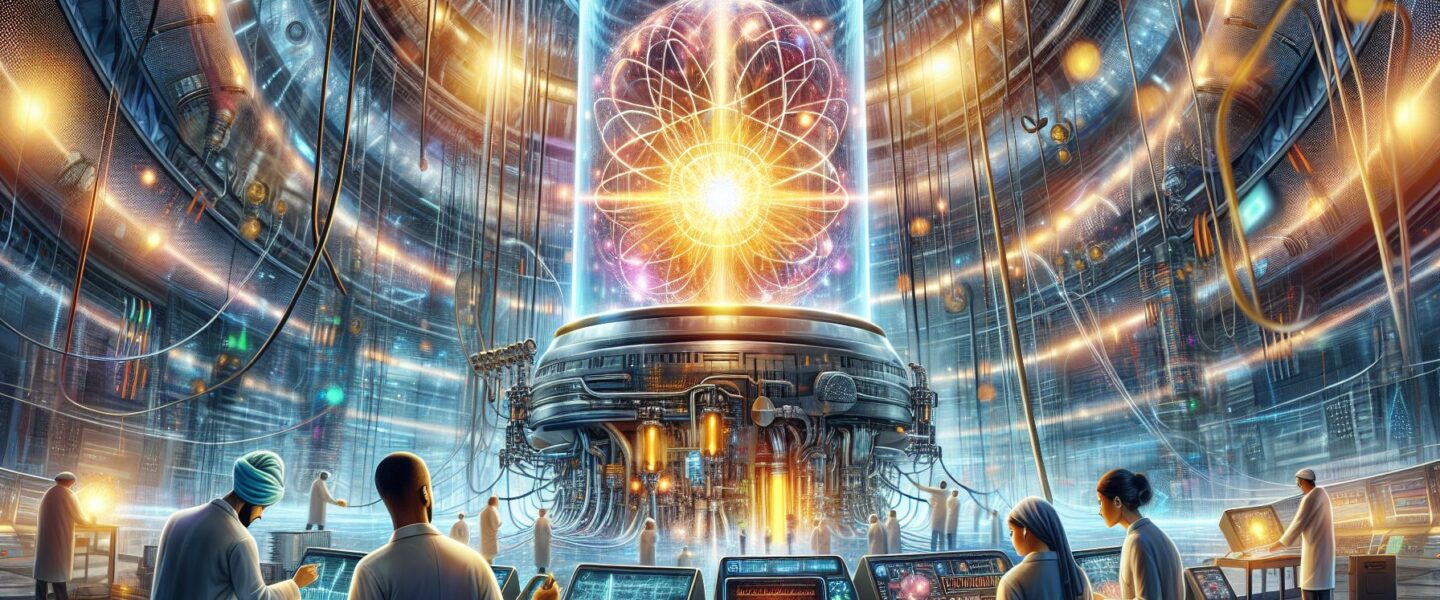
Hello, fellow tech aficionados! Today, we’re diving into a subject that could completely change how humanity consumes energy—nuclear fusion! Yeah, I know, it sounds like something straight out of a sci-fi novel, but trust me, this is as real (and as exciting) as it gets. Nuclear fusion has been the holy grail of energy sources for decades, and recent advances are making the dream of virtually limitless clean energy a tantalizing reality.
The Basics of Fusion: A Cosmic Dance
Alright, let’s start with the basics. Nuclear fusion is the process that powers our sun and every other star in the universe. It works by fusing two light atomic nuclei to form a heavier nucleus, releasing energy in the process. Unlike its cousin, nuclear fission (which splits atoms apart), fusion doesn’t produce nasty radioactive waste. It sounds simple enough—just squeeze some hydrogen atoms together and voilà, right? But oh boy, we’ve got a bit of a challenge doing this on Earth.
The Breakthroughs: Harnessing a Star on Earth
Recent developments in fusion technology are nothing short of exhilarating. Companies like ITER and startups like Commonwealth Fusion Systems are leading the charge with ambitious projects. The cool kids in white lab coats are using magnetic confinement devices called tokamaks and stellarators to try to recreate the sun’s conditions.
Late last year, the National Ignition Facility (NIF) in California achieved something incredible: scientific net gain in fusion energy. This means they got more energy out than they put in. It’s like finding extra fries at the bottom of your takeaway bag—only, you know, significantly more important.
How Nuclear Fusion is a Game-Changer
An Ocean of Clean Energy
Imagine this: cheap, virtually limitless energy with no carbon emissions or long-lived nuclear waste. That’s what fusion promises. A single kilogram of fusion fuel (usually isotopes like deuterium and tritium) could produce the same amount of energy as 10 million kilograms of fossil fuel. It’s like finding out you could power your apartment with a AA battery for eternity.
Environmentally Irresistible
Now, I’m sure you’ve noticed the slightly crispy state of our planet. But with fusion, we could flip the script on climate change. No greenhouse gases. No air pollution. Just clean, sustainable energy. It sounds like a dream, right? Well, friends, we’re inching closer to that dream each day.
The Hurdles: Why Isn’t Every House Running on Fusion Yet?
Heating Things Up is Hard
One of the biggest challenges is the temperature required for fusion—think 150 million degrees Celsius. For context, that’s about ten times hotter than the core of the sun. Maintaining such extreme conditions in a controlled manner here on Earth is like trying to keep a snowball fresh in the middle of the Sahara.
The Fusion Fuel Dilemma
Then there’s the matter of fuel. While deuterium is plentiful, tritium isn’t naturally abundant. Thankfully, techies are working around this too, planning to breed tritium in “blanket” layers inside reactors.
Economies of Scale
Finally, there’s the question of cost. Developing fusion technology is expensive—like, really expensive. But imagine what happens when you finally get the ideal tech: the initial cost seems negligible when compared to the perpetual energy payout.
The Way Forward: Looking into the Crystal Ball
Despite the challenges, we can’t lose sight of the incredible progress being made. The fruits of labor from fusion could democratize energy access, providing every nation with the capability to generate their own power.
Startups and Unicorns Galloping Towards Fusion
With marquee startups and innovative companies jumping into fusion, the industry is ripe for the picking. Think about ventures like Helion Energy, which are already claiming experimental successes. These entities are the eclectic mix of ambition and sci-tech wizardry the fusion sphere needs to move from theory to application.
Fusion’s Broader Implications
Let’s get a bit visionary here. Beyond energy supply, fusion’s potential extends to realms like space travel (think about powering spacecraft with onboard fusion reactors) to medical advancements (isotope production). The sci-fi stories our parents read might soon be the reality we live in, minus the killer robots, we hope.
Signing Off: The Dawn of a New Energy Era
Nuclear fusion is no longer just wild fantasy. The steps we’re taking today could ensure that tomorrow, energy scarcity becomes a footnote in history books. We’re on the edge of something big, something capable of transforming industries, economies, and even our societal norms.
So next time the topic of energy comes up over your brunch mimosas, remember: it’s not just about harnessing the power of the sun anymore, it’s about creating it. Here’s to exploring the great unknown and lighting up the future! Stay geeky, my friends.