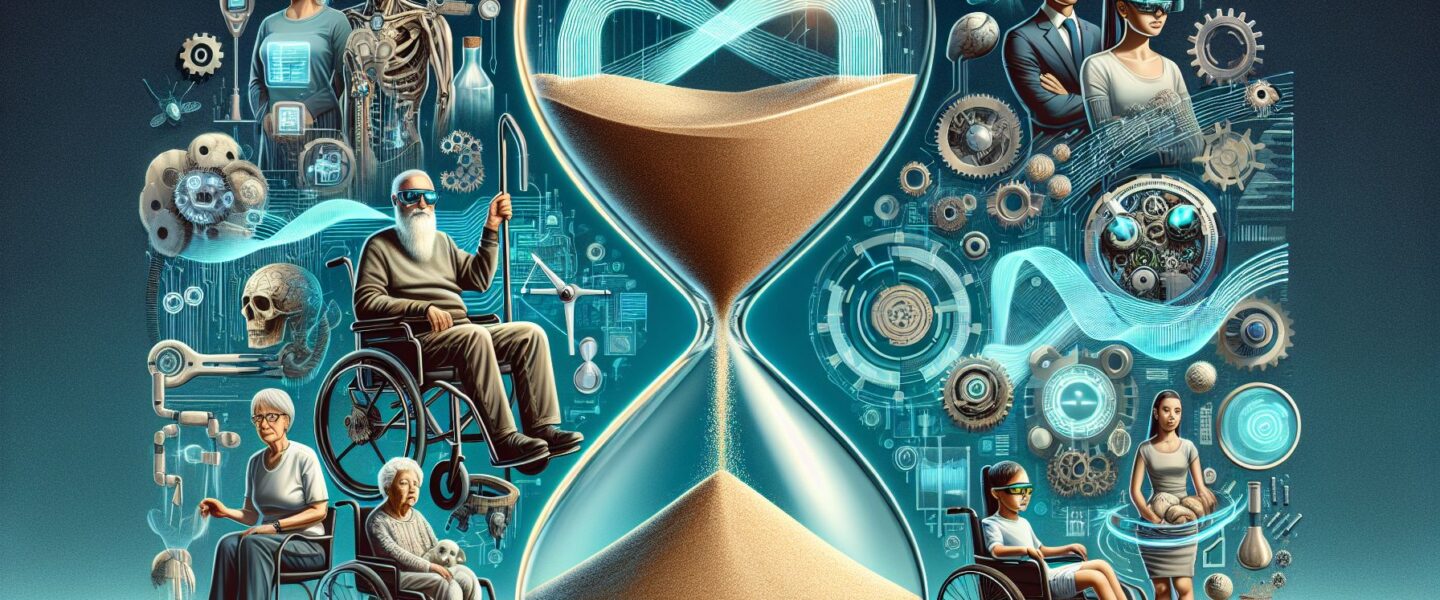
Greetings, fellow tech enthusiasts! I hope your coffee is as strong as your Wi-Fi connection. Today, I want to talk about a topic that’s as exciting as the latest smartphone drop and possibly even more life-changing (pun intended): longevity. Yes, we’re talking about living longer, healthier lives, thanks to the wonders of modern technology. Grab a comfy chair, and let’s explore a future where living to 100 could be just the beginning.
The Quest for Longevity: Not Just for Wizards Anymore
For centuries, humans have dreamed of extending life beyond the typical span. From the mythical Fountain of Youth to the quest for immortality found in so many legends, we’ve been chasing the idea of living longer and healthier for as long as history can remember. Today, this dream is no longer just for wizards or alchemists. It’s for scientists and engineers. They are the new magicians, wielding technology as their wand.
Recent Breakthroughs: The Tech That Keeps on Giving
Genetic Modification: Editing Our Way to Longer Lives
Remember when CRISPR-Cas9 was all the rage? Well, it still is! The genome-editing tool was a game-changer, allowing us to snip out bad DNA like it’s last season’s fashion. Researchers are now using CRISPR to target genes associated with aging, potentially slowing down, or even reversing, the process. Imagine a future where age spots are as rare as floppy disks!
Senolytics: Cleaning Up Our Cellular Mess
Then there’s senolytics. These are like the Marie Kondo of our cells. They clear out senescent cells, those cranky old cells that refuse to die off and cause inflammation, which contributes to aging and disease. Companies like Unity Biotechnology are actively researching senolytic drugs, and early results are promising. Who knew tidying up at the cellular level could spark so much joy?
AI in Healthcare: Your Friendly Neighborhood Health Consultant
Artificial Intelligence is also getting in on the longevity game. By analyzing vast datasets, AI can predict health issues before they arise, like having a personal Nostradamus, but with fewer cryptic riddles. AI-driven diagnostics, personalized treatment plans, and even AI-designed drugs are making waves. My Fitbit tells me to move. Soon, my AI doctor will tell me how to live to 120.
The Implications: Living Longer, Living Better
Economic Shifts: Show Me the Money
Living longer has some serious economic implications. Imagine the benefits (and challenges) of a workforce that doesn’t retire at 65. Pensions, healthcare, job markets, all could see radical changes. Expect new industries focused on enhancing the lives of those in their golden century. We could be looking at a trillion-dollar longevity economy.
Social Impact: Granny’s Got a Brand New Bag
Let’s not forget the social side of things. Living to a ripe old age isn’t just about more birthdays. It’s about quality of life. There will be a greater emphasis on lifelong learning, second (or third) careers, and redefining what it means to be ‘old.’ Senior centers might look more like startup hubs, with folks trading in knitting needles for coding workshops.
Environmental Concerns: More People, More Problems?
Of course, we can’t ignore the environmental impact of billions of people living longer. More resource consumption could strain our already stressed planet. Finding sustainable solutions will be key. It might be time to finally take recycling seriously, folks!
Challenges: It’s Not All Sunshine and Roses
Ethical Dilemmas: Playing God or Progress?
With great power comes great responsibility, and longevity technologies raise some serious ethical questions. Who gets access to these life-extending treatments? Could this widen the gap between the haves and the have-nots? It’s a sticky situation that requires balancing innovation with equity.
Technological Hurdles: Bugs in the System
Technological hurdles are nothing new in the world of innovation. Challenges like ensuring the long-term safety of genetic modifications or proving the efficacy of new drugs remain. But if the tech industry has taught me anything, it’s that perseverance and a little bit of caffeine can solve almost any problem.
The Future of Longevity: A Brave New (Older) World
So, what does our future look like if these technologies continue to advance? Well, strap in, because it’s going to be an interesting ride. Picture this: a world where chronic diseases are rare, where 100-year-olds are running marathons (or at least power walking), and society is enriched by lifetimes of wisdom and knowledge.
Living longer isn’t just about adding years to life. It’s about adding life to years. As someone whose biggest worry is usually deciding which tech conference to crash next, I must say that this exploration into the age of longevity feels like the ultimate hack. Forget about “there’s an app for that.” Soon, we’ll be saying “there’s a gene for that.”
Conclusion: Embracing the Future with Open Arms and Minds
As we move forward, let’s be excited but cautious, adventurous but responsible. The technology of tomorrow is being built today, and we all have a part to play. So, whether you’re a coder, scientist, entrepreneur, or just a fellow tech nerd, keep dreaming big and stay curious. As for me, I’m off to learn how to say “65 is the new 25” in as many languages as possible.
Thanks for sticking around, folks. May your days be as long as your patience at a tech keynote speech, and may your future be as bright as the latest phone screen. Until next time!