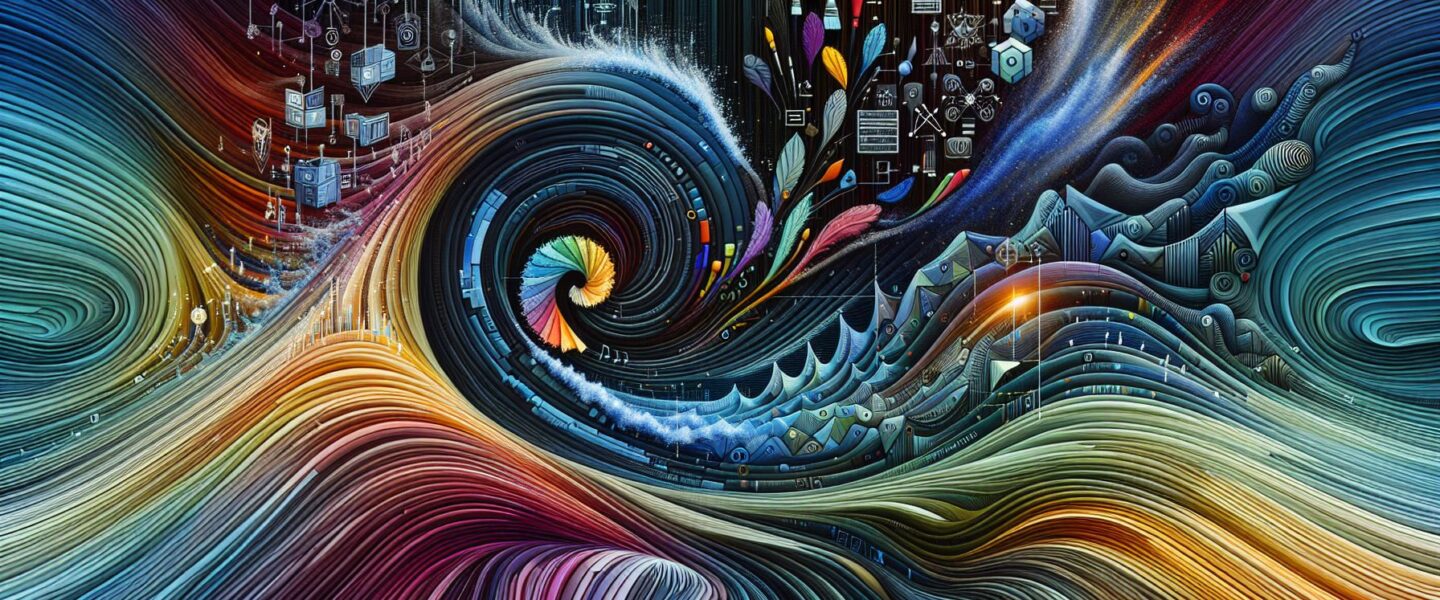
Hey there, fellow tech enthusiasts! Today, we’re diving into the wild world of zeros and ones that is revolutionizing how we create, perceive, and experience art. Yes, I’m talking about Artificial Intelligence in the creative arts—a topic that’s not just fascinating, but downright magical. Buckle up, because we’re about to embark on a journey filled with pixels, paintbrushes, and poetic pixels (if that’s a thing)!
How Did We Get Here? A Brief History
First, let’s roll back the reel for a second. The marriage of AI and art isn’t exactly news; it’s been brewing in the tech cauldron for some years. Remember when Google’s Deep Dream turned photos into psychedelic masterpieces? Or when IBM’s Watson co-wrote a Bob Dylan-style song? These were just the appetizers. We’ve come a long way from then, and it’s now a full course meal blending neural networks and creativity.
A Journey of Algorithms
The real magic began when neural networks started mimicking human artistry. Around 2014, researchers at Stanford and Google set the ball rolling, revealing that deep learning algorithms could actually “learn” artistic styles. Fast forward to today, and tools like OpenAI’s DALL-E are crafting images from text prompts that even Da Vinci might nod at, albeit from the Renaissance cloud.
The Present: Creativity Meets Code
So, what’s happening right now? How’s AI changing the creative industry? Let’s break it down.
The Art of Creation
Take a moment to imagine a world where AI generates visual artwork, composes symphonies, and even writes novels. But don’t panic, dear artists; AI isn’t here to steal your brushes and pens. Rather, it’s like having a cosmic, super-charged assistant beside you. AI tools can now help designers with initial drafts, musicians with harmonic ideas, and writers with plot twists.
Platforms like Runway ML and Artbreeder are empowering artists to explore uncharted creative territories. These tools allow creatives to generate infinite variations, sparking imagination without the traditional constraints of human fatigue or bias.
Making Creativity Accessible
One of the coolest aspects is how these AI tools are making creativity accessible to everyone. Remember the time when art was mostly reserved for those with access to extensive training or some natural gift? With AI, everyone gets to join the playground. Yes, even your cat Gordon could probably make its debut at a virtual art exhibition with a little help from AI.
Challenges on the Horizon
Ah, but it’s not all cloudless skies and rainbow digital brushes. While we’re living in a techno-utopian dream, there are thorns in this AI-creative bouquet.
The Authenticity Dilemma
With AI art becoming increasingly sophisticated, we face the question of authenticity. Who owns an AI-generated masterpiece? Is it the programmer who wrote the code, the machine that created it, or the end user who fine-tuned it? Our traditional views on authorship and originality are on shaky ground, and it’ll take ongoing debates and possibly even legislation to sort this one out.
Artistic Jobs and AI
And then there’s the concern about AI nibbling away at creative jobs. While it’s true that some routine tasks might be automated, creativity is so inherently human that quite frankly, I think we’ll always want the touch of a human brain connected to a splash of soul and empathy. That’s something AI still lacks, last time I checked.
The Future: Art in the Age of AIs
Where are we headed from here? What could the AI-art frontier look like in 5, 10, or even 20 years?
A Canvas of Possibilities
As AI models become more advanced, we might see original works that don’t just mimic human-made art but offer entirely new aesthetics previously unimaginable. Imagine AI creating entire interactive universes in video games or personalized narrative adventures composed on the fly based on the player’s emotional responses (scanning your face for that, perhaps?).
Enhanced Collaboration
Artists collaborating with AI is likely to become a new norm. Imagine teams of human artists partnering with AI models for exhibitions that explore not just the boundaries of artistic mediums, but transcend them altogether, creating multisensory experiences.
Wrapping It Up
In the grand story of art history, AI represents a new chapter, not an endpoint, but a fresh horizon. While it brings challenges, the potential rewards of collaborating with machines are genuinely exciting. As Alan Turing once suggested, it’s about seeing “machines in a whole new light.”
So, whether you’re an artist, a techie, or just someone standing on the edge of this new digital renaissance, embrace the change with curiosity and creativity. I’m sure glad you joined me on this exploration. Let’s keep pushing these limits together, onward to whatever comes next.
Catch you in the next post, future-artists! 🎨🤖