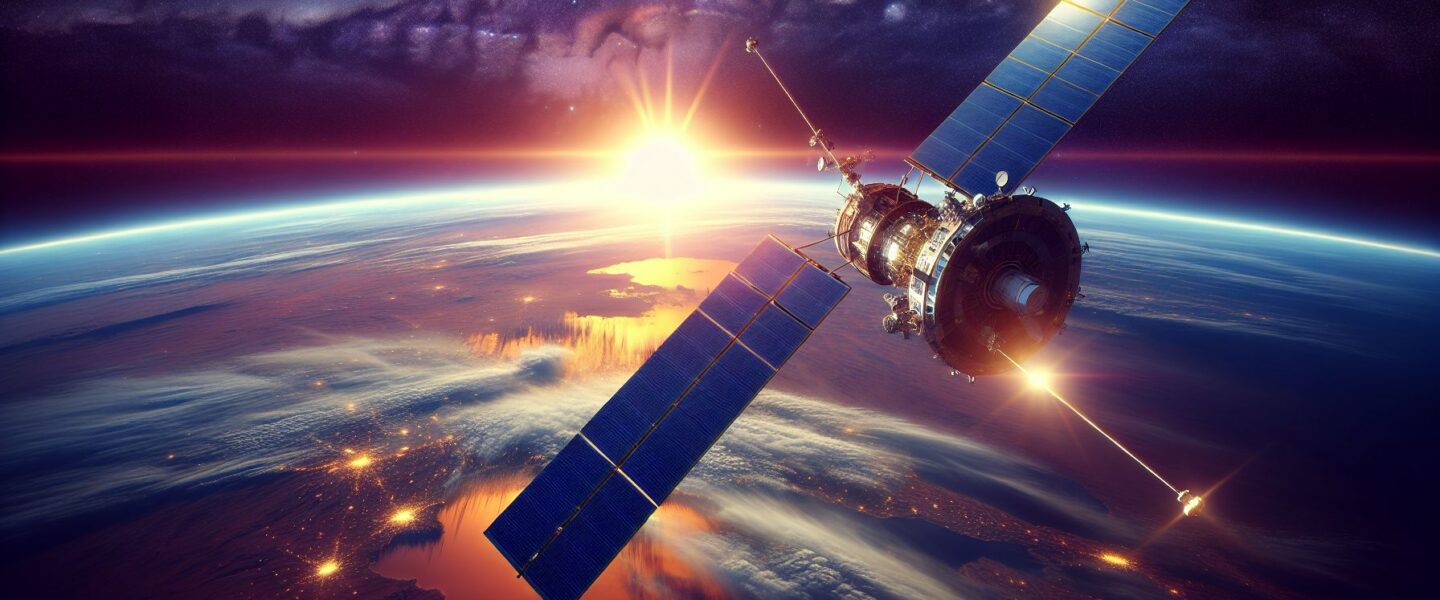
Hey there, fellow tech enthusiasts! It’s an exciting time to be alive, isn’t it? Strap yourself in, because today we’re blasting off into one of the most thrilling developments in technology: the burgeoning world of satellite technology and its role in our not-so-distant future in space. We’re witnessing what I like to call the “Dawn of the Age of Space,” where satellites are more than just shiny things that float about up in the sky. They’re slowly but surely transforming into full-fledged game-changers for how we’ll interact with our planet and beyond.
The Satellite Renaissance
Remember when satellites were just government projects, built at astronomical costs and accessible only by a few select agencies? Yeah, those days are long gone. What we’re seeing now is like a satellite renaissance, thanks largely to commercial companies entering the fray. Think of SpaceX, OneWeb, and the up-and-coming Relativity Space, among others. These companies aren’t just launching satellites with frequency (like dropping an angry tweet at three a.m.), they’re doing it efficiently and affordably.
Low Earth Orbit: A Satellite Playground
The big buzz in the satellite world right now revolves around Low Earth Orbit or LEO, where a constellation of small satellites is transforming how we connect with each other. For those of you who skipped Earth Science 101, LEO is where these satellites hang out, typically ranging from 100 to 1,200 miles above the Earth’s surface.
What’s fascinating here is the sheer number of satellites (literally, thousands of them) being flung into LEO. SpaceX, with its Starlink program, is executing this on an unprecedented scale, providing high-speed broadband internet to even the remotest hamlets on our planet. Just imagine binge-watching your favorite shows from a tiny village in the Himalayas. It’s like Netflix and chill without borders.
Democratizing Space
Perhaps one of the most exciting aspects of the satellite boom is the democratization of space. The barriers for entry are lowering, allowing not just mega-corporations but also universities and even high schools to send their own satellites into orbit. It’s like open-source development but on a celestial level.
The Cost Factor: Launch on a Budget
Remember when we talked about how launching a satellite used to cost a king’s ransom? With reusable rockets and miniaturized satellite tech, costs have plummeted. Companies like Rocket Lab focus on small satellite launches at a fraction of the cost. Picture this: you could fund a satellite project for less than the cost of that luxury yacht you’ve been dreaming about. Okay, maybe yachts aren’t cheap either, but you get the point.
Applications That Will Blow Your Mind
This isn’t just about keeping the skies busy. The practical applications of satellite technology could genuinely change life as we know it.
The Internet of Everything
We’ve all heard of the Internet of Things (IoT), but satellites are turning this into the Internet of Everything. Imagine self-driving cars moving across borders because they’re all connected to the same satellite network. Or smart agriculture systems that adjust irrigation in real-time based on data metrics delivered from space. We’re talking about a level of interconnectedness that would make even the most hardcore techie giddy with excitement.
Emergency Services on Steroids
In times of natural disasters, traditional communication networks often take a hit. Satellites can provide emergency communications when terrestrial networks fail. The rise of satellite technology means communities can be more resilient, responding faster during crises with real-time data and communication.
The Challenges: Not Just Rocket Science
As awesome as this tech frenzy is, it’s not without its hiccups. Space debris is becoming a bigger issue, with thousands of artificial objects zipping around our planet. Imagine playing a game of bumper cars, but at thousands of miles an hour and millions of dollars on the line. Yikes.
Regulation Wrangling
Another speed bump is the regulatory confusion that comes with this newfound enthusiasm for the stars. There are countless discussions at both national and international levels on how to manage this complex web of orbital objects. We need rules, people! It’s either that, or we’ll eventually have to hire space traffic cops (a decidedly less exciting prospect, if you ask me).
Future Gazing: What’s Next?
Let’s indulge in some speculation, shall we? The horizon looks tantalizingly sci-fi. Think of interstellar satellites that could potentially assist in longer missions, say, around the moon or even Mars. Or quantum-linked satellites making encryption hack-proof. Or how about in-orbit manufacturing, where the zero-gravity environment allows us to make materials impossible to create on Earth? The possibilities are, quite literally, infinite.
Wrapping Up
So there we have it: a quick dive into the mind-boggling world of emerging satellite technology. We’re on the brink of a techno-utopian space age that until recently seemed a far-off dream. And while the road to the stars might be littered with challenges, it’s a journey worth taking.
Whether you’re a coder, an entrepreneur, or just an intrigued onlooker, the age of satellites offers a galaxy of opportunities. It shows just how far human ingenuity can go when we decide to explore and innovate. And who knows? The next time we chat, maybe we’ll be doing so from our very own space pod, orbiting above this beautiful blue planet we call home.
Until next time, keep looking up! 🌟