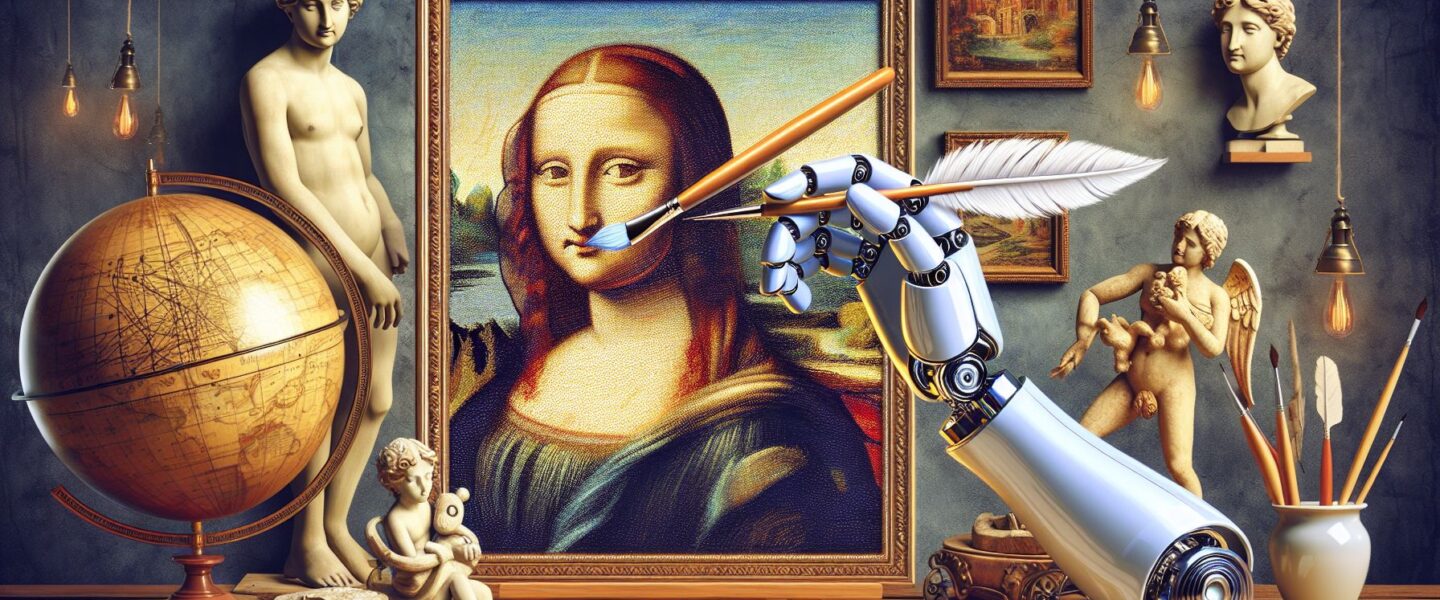
Alright, tech enthusiasts and dreamers of tomorrow, gather round! It’s time to talk about one of my favorite intersections of technology and creativity, where the left brain meets the right, and calculated algorithms sit down with wild imagination for a cappuccino. Today, we’re talking about Artificial Intelligence in the Creative Arts.
You might be thinking: “AI and art? Aren’t those like oil and water?” Actually, not at all. They mix beautifully, and when they do, the results are incredible. From composing symphonies to painting masterpieces, AI isn’t just a utility anymore. It’s a creative partner. As someone who has dabbled on both sides, watching AI’s evolution in this space has been absolutely fascinating. So, let’s get into it!
The Brush Strokes of Bytes
When people first think of art, the image is often of some solitary genius with a palette and an easel, battling their inner turmoil to create something transcendent. A bit dramatic, right? But now, those brushstrokes are being made, quite literally, by computers.
Take DALL-E from OpenAI. It turns text prompts into whimsical and detailed images within seconds. Want a picture of a two-headed flamingo drinking tea on Mars? No problem, DALL-E’s got you. This tool, and others like it, have opened doors for artists to explore new realms without the physical constraints.
I remember the first time I played around with AI-generated art tools. The process was eye-opening. Here was a tool that didn’t replace creativity, but enhanced it. By offering ideas that wouldn’t naturally occur to a human mind, AI applications inspire us to think bigger, explore wilder possibilities, and honestly, sometimes just have a good laugh at how utterly bizarre it can get.
Sounds Like (Robo) Spirit
Let’s shift the spotlight to music. If you’d told classical composers from centuries past that robots would one day compose music, they’d probably assume you meant Beethoven with a prosthetic hand. Fast forward to now, and AI is composing everything from pop ballads to classical sonatas.
AI models like OpenAI’s Jukebox and AIVA are creating music that’s not just technically proficient but emotionally resonant. Can you imagine Paul McCartney jamming with a deep learning algorithm? It’s happening. AI generates new tracks inspired by iconic musicians, and even composes new genres by merging styles in ways that sound straight out of a sci-fi movie.
And that’s just the beginning. These AI musicians don’t suffer from creative blocks or temperamental muses (looking at you, Beethoven). They can produce an endless stream of music, ready to be tweaked, remixed, and reinvented by human hands.
From Pages of Code to Poetry
Words hold immense power, and right now, AI’s getting pretty good at wielding that power in the creative arts. Text-generating models like GPT are writing stories, poetry, and scripts that blur the line between human and machine creation.
Some of these models have even written full novels. Sure, they sometimes lack a bit of depth. Let’s just say character development is a work-in-progress. But they can pump out ideas and frameworks faster than a caffeine-fueled writer during NaNoWriMo.
I had a conversation with a budding author who uses AI as her brainstorming buddy. She starts with a few concepts, runs them through a model, and out pops a bunch of plot twists and character arcs she hadn’t considered. It’s like having an infinite writer’s room at your fingertips.
Challenges and Critiques
Of course, bringing AI into the arts isn’t without its controversies. Questions about authorship and originality abound. When an algorithm outputs an award-winning painting, who owns it? The programmer? The algorithm? The person who commissioned it? Philosophers and lawyers alike are scratching their heads, and it’s a fascinating debate to follow.
The debate over AI’s role in art also touches on authenticity. Some purists argue that art without human emotion and intent loses its soul. But let’s be real: if AI-created art can move us, make us think, or even stir controversy, isn’t that a trait of great art, regardless of its creator?
Another concern is the risk of homogenization. If AI models are trained on existing works, will they repeat the same styles over and over? This is an ongoing conversation in the tech-savvy corners of the internet, and one that AI developers are keenly aware of as they continue to iterate on these powerful tools.
Where Do We Go from Here?
Looking ahead, the partnership between AI and the creative arts has serious potential. We’re just scratching the surface of what’s possible. Imagine AI tools so advanced they can co-create with humans in real-time, anticipate creative needs, or even help recover lost art forms through analysis and recreation.
AI makes creative tools accessible to everyone. Whether you’re a novice or a seasoned artist, these tools open up a world of possibilities, breaking down barriers and leveling the playing field.
The marriage of AI and the creative arts isn’t about replacing human ingenuity. It’s about enhancing it. It’s about embracing new possibilities, challenging the status quo, and maybe, just maybe, painting the world a little bit brighter with the help of our digital friends.
So go forth, fellow creators, and test the waters of this creative renaissance. Grab an AI brush and see what kind of masterpiece you and the algorithm can conjure. Let’s keep this dialogue going because who knows? Today’s robo-artist might just be tomorrow’s Van Gogh (minus the ear incident, hopefully).